Instagram Dumps Early Adopters for a Shot at the Mainstream

1344924671.jpg

1344924671 When Instagram burst onto the scene with its mobile only platform and funky photo filters it came armed with a secret. It wasn’t just about the photos.

Sure, the vast range of photo filters were appealing. They provided a layer of nostalgia for the Gen Xers raised on Kodak round edged photos and soft focus pastels from the 70s. Some filters created a more edgy feel, displacing the photo border and accentuating the top end of the colour spectrum. They made the amateur photographer feel empowered, even if the filters sometimes degraded the photo quality. What we lost in quality we made up for in consistency of image, framing and in the ease of digital cropping.

Community was the secret sauce of Instagram

But Instagram was more than just a fun way to take photos. For many social network early adopters, it was a sanctuary from the noise of Facebook and Twitter. It allowed people to curate small communities of like minds, where networks of dozens, hundreds and in some cases, thousands, of people could share photos, tips and engage in in-the-moment sharing, collaboration and discussion.

And as the platform was engineered around mobility, it had built-in location awareness and sharing, so that closed networks of connections could create a sense of context around the digital interaction. Moreover, with push awareness, users could be updated on any interactions with their own images, comments, likes, loves and so on. It brought a human dimension to the digital experience. It was a sense of community and all the goodness that comes with that sense of belonging.

Facebook’s billion dollar acquisition changed the Instagram game

When Facebook purchased Instagram back in April 2012 for about $1 billion, it was only a matter of time before something changed. Facebook CEO, Mark Zuckerberg focused on synergies, announcing:

For years, we’ve focused on building the best experience for sharing photos with your friends and family … Now, we’ll be able to work even more closely with the Instagram team to also offer the best experiences for sharing beautiful mobile photos with people based on your interests.

But throughout 2012, Facebook has also been under pressure to prove its IPO valuation. And Instagram was a canny move, because it brings a ready made market.

Changing Instagram’s terms of use

Facebook are well-known for pushing the limits of user privacy. They started with the now failed Beacon. Then they stepped back and made a claim over all user generated content published on the social network. After a series of protests, Facebook modified their claims, but still succeeded in shifting the boundaries on user privacy and content ownership.

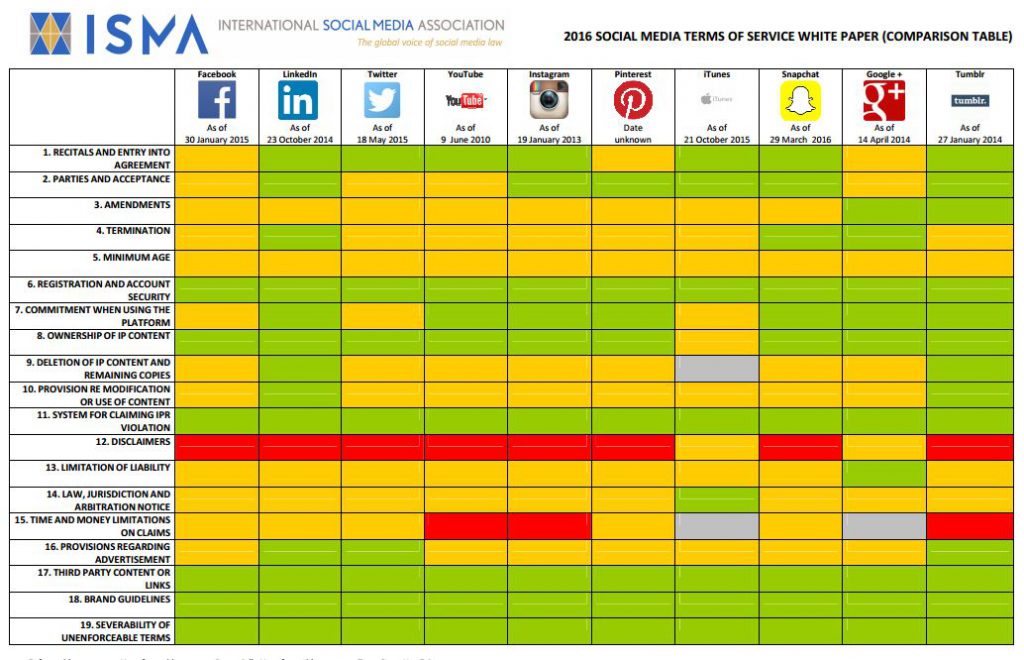
Taking a leaf out of the Facebook guide to user engagement, Instagram have now updated their terms of use which are due to come into effect on January 16, 2013. Buried within the Instagram site, these terms provide for the following “rights”:

InstagramRights

Saying goodbye to the early adopters, welcoming the mainstream

In making this move, Instagram is sounding its own death knell. It is signalling the end of the relationship to those who care about (and understand) the complex nature of web privacy. These “early adopters” were the founders of the Instagram community and fuelled its growth.

According to the diffusion of innovations, early adopters are vital in bringing new technology to the mainstream audience. Without the support of the early adopters, new innovations fall into the “chasm” and never reach wide acceptance within a community.

DiffusionOfInnovations

But the early adopters have done their job now and as Instagram says goodbye to them, it is opening its arms to the mainstream. The early adopters have bridged the chasm and are shifting their focus away from community building to monetisation.

Facebook’s lucrative double whammy

Facebook’s billion dollar investment has not only eliminated a competitor, it has opened a lucrative new revenue stream. Extending the existing Facebook photo sharing functionality (for which it was already a global leader) by integrating the Instagram capabilities will help drive further online usage.

The change in the terms of use will provide new revenue by allowing Instagram to license your photographs, name and images to content hungry third parties.

The shift from users to customers

Many have suggested that Instagram, as an alternative, should charge to download their app. But this would change the nature of the relationship. At present, Instagram has a strong community of “users”, but charging would make those users “customers” – and that in turn would compromise the business model.

As it currently stands, Instagram’s “customers” will be those “third parties” – brands and businesses who are interested in the vast quantities of content being produced by Instagram’s users.

Instagram may re-jig the terms of use with slightly more generous concessions based on user protest, but users should expect that the direction to be maintained.

So what happens to the early adopters?

They’ll move to a new service. They’ll rediscover Path or re-evaluate the new Flickr app. Perhaps they’ll warily move to the new mobile Twitter app with in-built filters.

But saying goodbye to the early adopters is not the end of the world. It’s the start of a new mainstream story. And many of us will only care when we see our own images splashed, out of context, in some other place on the web. But by then, that will be too late.

For many, privacy and “intellectual property rights” over our own image is happily traded for the benefits offered by social networks. But the choice is individual – and the challenge we all face is to be informed. And it’s bound to become more challenging in 2013.

What Facebook’s Year in Review Reveals About Us

facebooktrendsAus.png

facebooktrendsAus The promise of big data is that it can reveal to us the truth in our behaviours, not just our beliefs.

Just think, for example, about your internet use over the last year. Or month. Or even week. What did you do? What sites did you visit? What did you click on? Why did you share a page or two, a link or a video? Now, imagine if we did the same thing for your friends – if we knew what they looked, liked and loved?

facebookstories2 And if we did the same with their friends, and their friends’ friends.

If we could overlay that in some way to create a visual tag cloud, we may just get a sense of what is important to our communities. We may garner some magical insight into what it is like to live in this rapidly changing world.

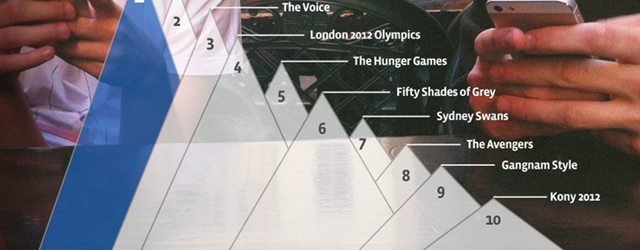
Well that’s what Facebook Stories is doing. Of course, it works best if you are a heavy Facebook user (I’m not), but it’s an interesting experiment that shows everything from your own personal timeline stories through to the trends that impacted us by country and by category.

But, for me, the most interesting thing that Facebook Stories reveals is where the pulse of our humanity lies. Take a look at some of the trends – you’ll see what I mean.

The Long Trail of Digital’s Long Tail

MarketoCaseStudy

For the last couple of months I have been researching the digital marketing automation market – speaking with vendors, watching demos, listening to customers and analysing features, statistics and case studies. It’s a crowded market with a wide variety of feature sets and capabilities.

But if there is one thing that is obvious in all the noise, it is this: while the technology has matured, digital marketing skills, capabilities and processes are comparatively immature.

Marketing automation software delivers impressive outcomes:

  • ROI: Identifying, nurturing and delivering warm leads into your sales funnel gives your marketing a direct line to ROI. This path to revenue provides marketers with the confidence and knowledge to understand what works and what doesn’t when it comes to digital marketing investment
  • Accelerate marketing maturity: marketing automation requires a certain level of process maturity in your marketing. For businesses where process has been lacking or alignment with sales has been ambivalent, marketing automation can deliver a relatively quick win
  • Generate uplift through omni-channel integration: many marketers focus on “last click attribution”. But we rarely make single click decisions – especially on more expensive purchases or when we are in a B2B situation. Integrated or omni-channel marketing has been shown to significantly impact revenue and pipeline.

The presentation below is a case study of one of Marketo’s own omni-channel campaigns. It reveals that the digital long tail is indeed, a very long trail. But careful planning and management can, with targeted content, deliver value across your marketing programs – not only for your digital work.

Interested in marketing automation? If you are interested in my upcoming marketing automation report, contact me here or sign-up for access to the Constellation Research Library.


Dell Launches Social Business Services

Dell Social Media Services

Much lauded for its own social business transformation, Dell is now taking its social media expertise to market, launching a new range of offerings through a collaboration between its marketing and services teams.

Targeting enterprise and medium sized business customers, the first offerings provide:

  • Education – best practice seminars for a range of industries
  • Advisory – strategy and optimisation
  • Listening and insights – social media monitoring and reporting
  • Listening Command Center – on-premise build out of a social media listening command center

Dell Social Media Services

Responding to the chaotic social media space, Maribel Sierra, Director Social Media Services at Dell explained that Dell’s customers are struggling to go beyond Facebook and Twitter. Customers are asking for Dell’s expertise in choosing tools, building training and scaling social media within the enterprise.

But it is not all about social media maturity. Customers are also wanting to understand how and where to get started with enterprise social media and how to gain executive support for social programs.

Pilot customers like Kraft Foods, Clemson University and Aetna have helped prove out the Dell model over the last year – and the range of services are expected to grow with demand. Right now, there are over 20 courses available through the Dell Social Media University – and they’re delivered either face to face or virtually.

These new offerings mark a decisive shift for Dell, providing a strategic services offering at the pointy end of customer experience for their customers. Working in this trusted space will keep Dell top of mind across their customers executive ranks. This will bring Dell into direct competition with organisations like IBM, Salesforce and the big consulting firms.

As 2013 begins to take shape, the future of social media innovation looks set to play out within the enterprise. On the customer side, expect more services firms to flood in as enterprises begin to transform social engagement into business value.

Reduce Marketing Risk with ADMA’s Compliance Hub

ADMA Compliance Hub

With recent changes to Australia’s privacy legislation, marketers now face a slew of regulatory responsibilities or risk significant fines of up to $1.1 million. Marketers and advertisers have been given 15 months to comply with the recent changes – and the Association for data-driven marketing and advertising (ADMA) has launched the ADMA Compliance Hub to assist in the process.

Part of the ADMA Knowledge Lab, the site contains:

  • News and updates
  • Video and whitepapers
  • Categorised forms, best practices
  • Webinars and guides

ADMA Compliance Hub

Covering a broad range of marketing compliance topics, the Compliance Hub is a welcome resource for time poor marketers. A quick review of the Online, Mobile & Social section revealed checklists for cloud computing, a group buying code of conduct and a model social media policy. And while the data and privacy section is top of mind for Australian marketers at present, sections on competitions, voice and email will come in handy as 2013 marketing activity shifts into high gear.

For companies new to the Australian marketplace, the Compliance Hub will be a welcome resource. Access is available to all advertisers and marketers until February 2013 – and then it will be closed off and available only to ADMA members.

Is Mobile Working For You?

Servant of Chaos website as iPad app

At the beginning of the year, digital traffic on mobile devices was sitting at about 5%. This was a small but important segment – but very few websites were optimised for mobile devices. And those that were offered slimmed down functionality. Even Facebook was slow to deliver on a mobile experience.

But through the year, mobile web usage continued to grow. Even on the ServantofChaos.com blog, we are seeing about 25% of our traffic coming via mobile devices (almost exclusively iPhone and iPad). These statistics appear to be consistent for other websites and represents a significant challenge for brands who continue to struggle with managing their digital presence. Indeed, Cisco’s Global Mobile Data Traffic Forecast for 2011-2016 indicates that Australian mobile data traffic will almost double in 2013. And by way of comparison, look at the rates for fixed IP traffic (ie non-mobile).

Cisco - Mobile and Internet Growth Prediction 2012-13


Respond now to the challenge of digital engagement

How do we respond to the challenges of digital content? While this rapid change in web behaviour and usage has taken many by surprise, we do not need to navigate these changes on our own. My recent report on digital disruption outlines some of the trends and the lessons that we can take away from the burgeoning digital and mobile revolution that has already taken place in Asia Pacific. This disruption is two-fold:

  1. Businesses must embrace and engage with their connected consumers via social channels. A significant proportion of mobile traffic is generated via social media. From “checkins” to product reviews, price validation or even basic product research, connected consumers are transforming the customer relationship. To understand this transformation, brands must understand the 5 Ds of Consumer Engagement.
  2. Rather than thinking “mobile first”, businesses need to think “mobile only”. The shift to mobile is a mega trend that is linked not to business per se, but to patterns of human behaviour. Our patterns of consumption are shifting from a single, stationary device like a desktop PC, to a second or third screen device that is always on, always connected. Business leaders must begin this transformation now or open the door to more agile competitors.

Lessons for the small business and independents

In many ways, a blog operates like a small, independent business. It has its own audiences – its own focus and a charter of engagement. When I moved ServantofChaos.com to a new design and platform, a key part of the decision making process was to address the trends that I was seeing. And while continuing analytics information combined with the trends and statistics reported reinforce this decision, I’m interested in individual points of view.

What do YOU think?

Are you a mobile device user?

Have you considered mobile as part of your digital strategy? If not, why?

From Big Data Science to Big Data Action

BrandWatchUSelection.jpg

From the dawn of civilisation through to the year 2003, Google calculates that humans have produced 5 exabytes of data. That’s a lot of stone tablets. But with the explosion of mobile devices, 3G and 4G networks and social networks, we now produce 5 exabytes of data every two days. That means that every photo you upload to Flickr or Facebook, every video you share with friends on YouTube or Vimeo and every one of the billions of tweets broadcast on Twitter is contributing to the avalanche of data.

But add to this the fact that each of these items comes with contextual data. At the same time that you update your profile or publish a photo, you may also be sharing your geolocation, your likes and preferences, your upstream and downstream behaviours, and your attitude to topics (based on sentiment). You may also be sharing your trust network of on and offline friends.

And this is just the tip of the big data iceberg.

The rise of big data is a blessing and a curse for CMOs

While analytics have been available to businesses for decades, but it has largely been the domain of business analysts and researchers. The rise of big data now places analytics firmly in the marketers court. Earlier in the year, a CMO Council and SAS report indicated that only 26% of marketers leverage customer data and analytics to improve decisions, targeting and personalisation.

The blessing of big data is that it is readily available to most organisations in the form of structured business data and the publicly available unstructured data coming from social networks. The curse is that in-house skills and experience with big data is scarce – with a number of marketers now looking to bolster their teams with big data scientists and data analysts.

Marketers don’t need data they need action

It’s not data scientists that marketers need, however. Already we are seeing software vendors emerging who are able to tap structured and unstructured data sources to produce business-ready dashboards. Mapped to best practice business processes, these dashboards and analytic tools promise to release marketers from the fear-inducing data tsunami that looms on the horizon.

Platform players such as Anametrix, for example, transform the science of data into actionable business knowledge for key business processes. This means you can spend less time and resources understanding the data and its various relationships, and focus instead on making decisions that impact the top and bottom lines of your business.

A great example of what can be achieved is the BrandWatch US Electoral Compass. Drawing on Twitter data and press discussion generated since July 2012, the compass matches structured information (location, policies and dates) with unstructured information (tweets, sentiment etc) to reveal the topics that are important to American voters. Now, this is not data from focus groups – it’s stated intention as revealed via status updates, commentary and attitude.

And as business analytics packages get better at mapping business flows, these reporting systems will become ever more granular. They promise to revolutionise the way that businesses engage with their customers – and that will bring another set of challenges for CMOs. The question is – are you ready for this new form of customer engagement?

BrandWatch-USelection

Event Report: ConnectingUp.org’s Social Media Forum

CUSydney.jpg

CU-MelbAdl

Connecting Up is a not for profit organisation that provides vital products, resources and programs designed to make the Australian not for profit and community sector stronger and more resilient. As part of this charter, Connecting Up recently held a social media forum in Sydney, Melbourne and Adelaide, showcasing the work of local organisations and sharing approaches and best practices.

In each of the locations I delivered a keynote address designed to set the scene – “Signs on the Road Ahead”. Rather than covering the basics of digital strategy and planning, many not for profits have moved beyond the social media basics and are looking for more targeted information. The aim was to provide communicators with a heads up on some of the trends and disruptions taking place in the world of digital communications. From this starting point, the participants then heard case studies from innovators working with not for profit organisations based in each city – rounding out a fantastic day with Q+A and an inspirational wrap up from Connecting Up’s Ben Teoh.

Adelaide – the hotbed of social media innovation

I am always amazed at the vibrance and innovation that emanates from the social media scene in Adelaide. The evening before the forum I was able to spend some time with some of the speakers and some of the energetic people who drive much of the online creativity coming out of Adelaide. It was clear that social media is maturing as a business discipline and Adelaide businesses are fortunate to be able to call upon professionals like Michelle Prak and Mal Chia.

During the presentation from Ben Osborne (University of Adelaide), many around the room were hastily taking notes and jotting down tips for handling challenging and sometimes volatile communities. His communications and crisis management flow chart was a huge hit and showed just how much planning and thought had gone into not only handling issues, but generating engagement and activating students across the campus.

Petra Durvocinova from RiAus sent all the geeks in the audience into paroxysms of bliss talking about science, story telling and community building. Linking curiosity, emotion, imagination and research together, Petra explained how storytelling can help audiences discover the wonders of science. The use of Livestreaming was a great opportunity to test and learn for RiAus, but the identification and nurturing of those passionate science communicators within the community was seen as essential to the long term success of their social media efforts.

Noriko Wynn from Conservation Council SA shared an in-depth dive into the world of Facebook ads and campaigns. Working not only in social media but across a range of communications and media, Noriko explained that the challenge was that sometimes there was too much to say. Social can accordingly, plan an important role in creating relevant and target communications.

CU-Sydney

Sydney – the niche and the scale

I was still a little jetlagged for the Sydney event, but a jolt of strong coffee soon had me ready for a full audience.

Rafi Cooper from WSPA delved into the narrative structure of digital storytelling. Using public narrative to focus and drive change and action (self->us->now), Rafi showed how WSPA campaigns were able to achieve impact at scale via social media. He did hint that WSPA have an advantage thanks to plenty of good stories and cute images of animals.

Yves Calamette from ACON shared a great – but niche case study on the power of social media to engage men on the topic of HIV prevention. While there was a niche focus for the campaign, Yves was able to show specific impact, ROI and best practices that are now being extended for an upcoming campaign.

Dae Levine from Republic of Everyone showcased how social media can help connect policy, planning and persuasion, presenting a case study on the Say Yes campaign. Integrated planning and digital strategy, events, installations, social proof and widespread educative communications were all used to influence the public debate around climate change and carbon pricing. While not all not for profit organisations can work on such a scale, Dae explained how various elements slotted together to create an overall impact. (And yes, the campaign was successful – with a carbon tax now in effect in Australia)

Treassa Joseph hit to podium like a dynamo. Armed with data analytics and a geek’s passion for statistics, Treassa introduced the audience to Twitter, Tweetups and Twitter festivals and showed how social media can mobilise a community to come together and take action around a cause. Expect to see more non profit tweetups in the near future!

Melbourne – from grass root to the oak tree

Cate Lawrence talked through the Green Renters experience – cultivating a niche community with style and grace on a shoestring budget. Many in the room marvelled at Cate’s grasp of social media and the impact that a very small team (see the presentation) can have when focused on the most important channels.

Chris Roberts from the Brotherhood of St Lawrence provided a great case study on how social media can be integrated into advocacy programs. Their efforts focused on a dental care initiative – and required audience education, influencer management, leveraging of existing marketing and integration of all channels towards very specific objectives. Again, this campaign was considered a success with dental now covered as part of the government’s Medicare scheme.

Daniel Lewis-Toakley from the Oaktree Foundation stepped through the Live Below the Line campaign that challenged Australians to live on $2 a day and share their experience via social media. The approach again followed the public narrative storytelling arc to create champions, engage a community and track engagement towards success. Another great not for profit success, the campaign showed the power of enabling a community not just corralling it.

Richenda Vermuelen from ntegrity provided a deep dive into the social media activation of a blogger program for World Vision. From the detailed selection process, storytelling approaches and on-the-ground management, Richenda stepped through the pitfalls and benefits that come from working with bloggers. It was a great presentation for any not for profit wanting to tap into the social media space.

Trust is Up for Financial Services’ Connected Consumers

Trust is Up for Financial Services

While the retail sector continues to flounder, the Financial Services industry seems to finally have cottoned on to the digital business opportunity presented by social media.  A new report published by ING shows that frequent social media users (ie that lucrative and market-making early adopter segment) view social media as being as reliable as other online media.

Moreover, social media goes beyond simple information dissemination. The report indicates that “financial information posted on social media changes opinions, preferences or behaviour more often”. Clearly, as we have noted previously, our connected consumers are discovering, debating and deciding what to purchase and when independently of our marketing funnel.

Financial services leaders will increasingly need to develop and execute strategies that reach, engage and transform their relationships with their connected consumers. The impact has been felt in 2012, but the power will grow through 2013. Is your company ready?

Print

Who Really Uses Facebook?

When you think of Facebook, the scale can be confronting:

  • 1 billion members
  • 45% of the North American population
  • 42% of Oceania
  • 35% of South America
  • 270 million members in Asia

But who really uses Facebook? What do they look like? How would you characterize them?

The clever folks from Soap Creative have done us all a service by providing this neat snapshot of the 36 Faces of Facebook. See which one you are. And see if you can see your grandmother too.